

Terrarium Base Mix with Gravel, Soil & Activated Carbon
VAT included · plus
Plant size: Pot Ø ⌀ 1 cmapprox. 1 cm tall
Sizes are approximate. Height is measured from the bottom of the pot to the top of the plant; diameter at the widest point.
- Plant care fundamentals: Understand the main principles behind healthy houseplant care.
- After delivery and first week: Unpacking, initial placement and settling in.
- Light and placement: Assess indoor light and choose a suitable position.
- Watering: Learn when and how to water houseplants.
- Potting mixes and roots: Choose a suitable potting mix and understand drainage.
- Humidity: Learn when additional humidity helps and how to provide it safely.
- Fertilising: Learn how and when to feed houseplants.
- Plant problems: Identify common symptoms and possible causes.
- Pest control: Identify common houseplant pests and suitable responses.
Every order is carefully packed and sent with tracking. If your plant arrives damaged or develops a problem covered by our 28-day guarantee, contact us with photos. Full conditions are available under Guarantee & Returns.
Visit our FAQ or contact customer support for help with orders, delivery or plant care.
Terrarium Base Mix with Gravel, Soil & Activated Carbon
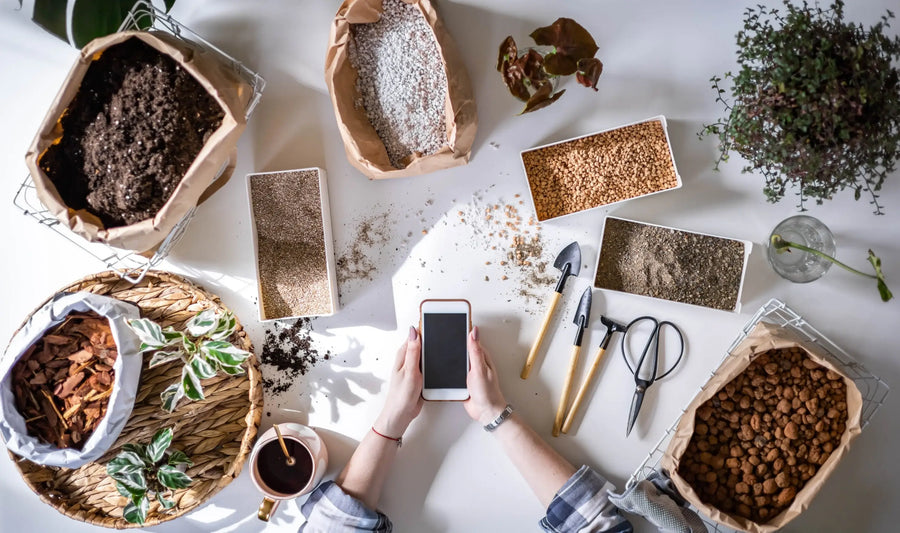
These are the core materials used to create a planted base in a small, humid terrarium. Gravel belongs in the lower mineral section, soil forms the root zone, and activated carbon can be added sparingly between layers. Add moss, stones or wood to suit your design.
Where each part goes
- Gravel: the lower mineral base.
- Soil: the planting zone for small rooted plants.
- Activated carbon: a small addition below the planting medium, not a substitute for drainage.
- Container size: especially practical for compact jars and planted glass.
Suitable plant choices
Choose plants that tolerate humid air and relatively little root space. Cacti and most dry-growing succulents do not belong in enclosed, wet terrariums.
Watering a planted jar
Use only a small amount of water at first, then observe moisture and condensation before adding more. A terrarium holds water much longer than an open pot. If the base collects standing water, correct the moisture level rather than trying to fix it with extra carbon.
Before planting
Keep the mineral section distinct from the planting zone. Use a barrier where needed to stop soil settling between coarse pieces. Assemble the materials according to the container and plant roots, rather than mixing everything as ordinary potting soil.
Choose options


Terrarium Base Mix with Gravel, Soil & Activated Carbon
Sale price€6,00

Recently viewed:


Sign up for Foliage Factory newsletter for early access to new arrivals and practical care tips that work in real homes.